
If you’ve been asking yourself, how many calories should I eat to lose weight? And still can’t find a clear answer, it’s actually simpler than it seems. The whole idea comes down to understanding your daily needs and how to create a proper calorie deficit for weight loss. In this guide, you’ll find the right number for you, an easy way to calculate it, and some practical examples. This approach is based on practical fitness experience and widely accepted nutrition principles.
Table of Contents
🔥 Quick Answer:
Most people lose weight by eating 300–500 calories below maintenance, which usually equals:
- Women: 1500–1800 calories
- Men: 1800–2200 calories
How Many Calories Should You Eat to Lose Weight Daily?
To figure out your daily calorie intake for weight loss the right way, you need to see the full picture not just pick a random number. It really comes down to two main things:
- Your Maintenance Calories
This is the number of calories your body needs to stay at the same weight no gain, no loss. It’s different for everyone depending on your weight, height, age, and how active you are.
- The Calorie Deficit
This is the gap you create to lose weight. Basically, you eat a bit less than your maintenance so your body starts using stored fat for energy. The key here is not to go too extreme, because cutting too much can lead to burnout, fatigue, or even hitting a plateau.
A good starting point for beginners is:
Best calorie deficit for beginners = 300–500 calories per day
This range works well because it helps you lose weight steadily without draining your energy. It’s also easier to stick to and lowers the chances of regaining the weight later. If you stay consistent with this and add some light activity or simple workouts, you’ll likely start noticing real progress within a few weeks.
What Are Calories and Why They Matter for Weight Loss

Calories are simply the energy your body uses to do everything from breathing and moving to exercising and burning fat. Every food or drink has calories, and your body deals with them in two basic ways:
If you eat more than your body needs → the extra gets stored as fat
If you eat less than your body needs → your body starts burning fat to make up for the energy
And this is where a key idea comes in: calorie deficit for weight loss. It just means eating a bit less than your daily needs. You don’t have to starve yourself or follow a strict diet the whole thing is about balance.
It’s also important to keep in mind that: Not all calories are equal (food quality matters)
Your body burns calories differently depending on your activity level and metabolism. That’s why combining your calorie plan with a simple routine like a lazy girl workout for beginners can make the whole process easier and more sustainable. Consistency matters more than being perfect And that’s really the foundation behind any weight loss plan that actually works and lasts.
The Simple Formula for Weight Loss
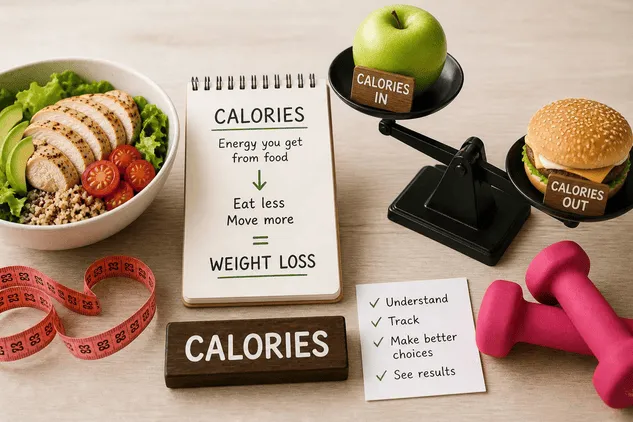
Calories for Weight Loss = Maintenance Calories – Calorie Deficit
Explanation:
- Maintenance Calories
This is the number of calories your body needs each day to maintain your current weight no gain, no loss. It varies from person to person based on weight, height, age, and activity level.
- Calorie Deficit
This is the gap you create in your calorie intake so your body starts burning fat instead of storing it. It’s the most important part of any weight loss plan.
Put simply:
If your body needs around 2000 calories a day, and you start eating 1500–1700, your body will make up that difference by using stored fat. That’s why we say a calorie deficit for weight loss is the real foundation behind results.
The key is to keep that deficit balanced:
Not too small → so you don’t slow down your progress
Not too large → so you don’t feel exhausted or end up gaining the weight back
For most people, a daily deficit of 300 to 500 calories works best. It gives steady, noticeable results and is much easier to stick with long term. The following method is based on practical fitness experience and widely accepted nutrition principles.
Read also: Lose Weight at Home for Women
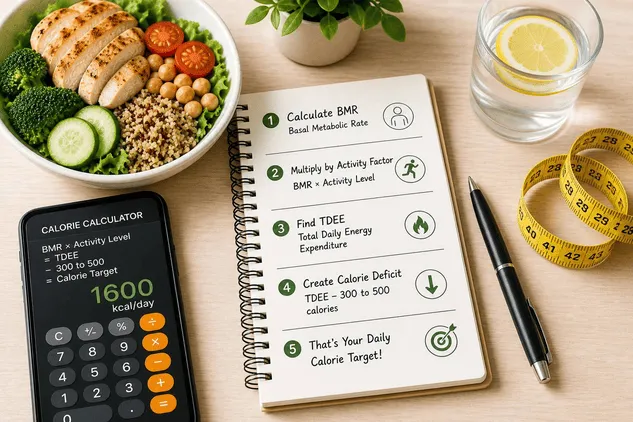
How to Calculate Calories Needed to Lose Weight (Step-by-Step)
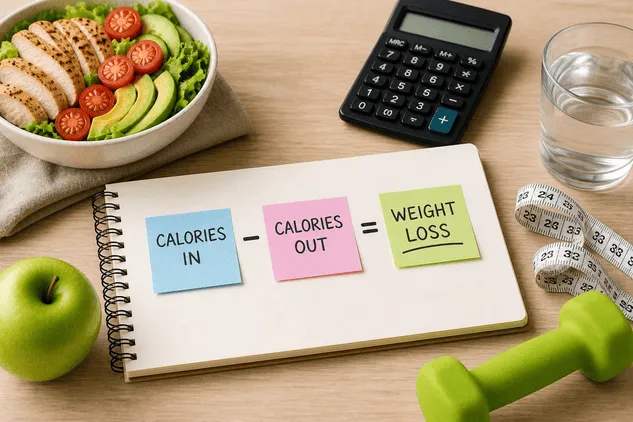
If you want to figure out your calories needed to lose weight (for females or males) in a simple, no-stress way, just follow these steps and you’ll get pretty close to your actual needs.
Step 1: Calculate Your BMR (Basal Metabolic Rate)
This is your body’s baseline calorie burn the amount of energy it needs just to stay alive (breathing, circulation, basic functions), even if you’re not moving at all. In simple terms, it’s the minimum calories your body needs daily.
Step 2: Adjust Based on Your Activity Level
Once you have your BMR, you need to adjust it depending on how active you are:
Sedentary (desk job + little to no exercise) → ×1.2
Moderately active (workouts 2–3 times/week) → ×1.5
Active (regular exercise or lots of movement) → ×1.7
The number you get here is your Maintenance Calories (your daily needs).
Step 3: Create a Calorie Deficit
Now comes the key step for weight loss—you need to eat a bit less than your maintenance:
Subtract 300–500 calories per day
This gives you a healthy calorie deficit for weight loss, helping you lose weight gradually without burnout or plateaus.
Simple example:
If your maintenance is 2000 calories:
1700 → slow, steady weight loss
1500 → slightly faster progress
Important notes:
- It doesn’t have to be 100% exact
- Consistency matters more than perfection
- Track your progress and adjust if needed
Using this method, you can easily find your daily calorie intake for weight loss without overcomplicating things.
Want to make this even easier? Use this simple calculator to get your personalized calorie target instantly:
Calorie Calculator
This estimate is based on your body stats and activity level, so you get a more accurate starting point.
Practical Examples (Real Numbers)
To make things clearer (not just theory), let’s look at some real examples you can relate to and easily understand calories needed to lose weight for both females and males.
Example (Female):
Weight: 70 kg
Activity level: Moderate
Maintenance calories: around 2000 per day
For healthy weight loss:
1700 calories → steady, gradual loss
1500 calories → slightly faster results
A simple, practical way to understand calories needed to lose weight for females without overthinking it.
Example (Male):
Activity level: Moderate to high
Maintenance calories: around 2500 per day
For weight loss:
2200 calories → slower but sustainable progress
2000 calories → faster weight loss
Same concept, just applied to men in an easy way.
Important note: These numbers aren’t exact, but they’re close enough to guide you. What really matters is tracking your progress and adjusting your calories based on how your body responds.
Quick Guide Based on Activity
If you want a quick answer to how many calories should I eat to lose weight without doing any calculations, you can use this as a simple reference:
Activity Level — Calories for Weight Loss
Low activity → 1200–1500
Moderate activity → 1500–1800
High activity → 1800–2200
This gives you a fast way to estimate your daily calorie intake for weight loss based on your lifestyle.
Quick tip: Start somewhere in the middle of the range. If you don’t see results after about two weeks, reduce another 100–200 calories or slightly increase your activity. This keeps your weight loss plan flexible and easier to stick with.
Calories for Weight Loss by Activity Level
If you want a quick estimate without calculations, use this simple reference:
| Activity Level | Calories |
| Low Activity | 1200–1500 |
| Moderate Activity | 1500–1800 |
| High Activity | 1800–2200 |
How Many Calories to Lose 1 kg Per Week?
A very common question is: how many calories to lose 1 kg per week? The answer needs to be realistic, not exaggerated.
On average, losing 1 kg of body fat requires a total deficit of about 7000 calories over the week. If you break that down daily, you’ll need a deficit of roughly 500–700 calories per day.
This usually leads to:
About 0.5 kg per week (with a 500-calorie deficit)
Up to 1 kg per week (with a slightly higher deficit + some activity)
And this is considered the best range because it’s: Healthy and safe, Easier to stick to, Less likely to cause plateaus.
Simple example:
If your maintenance is 2000 calories:
Eating 1500 → steady, consistent weight loss
Adding some activity → faster results
Important point: Trying to lose weight faster than this often leads to muscle loss, fatigue, and regaining the weight quickly. That’s why it’s always better to stick with a moderate calorie deficit for weight loss.
Bottom line: The goal isn’t just to lose weight fast the goal is to lose it and keep it off without going back to square one.
How Many Calories Should I Eat to Lose Belly Fat?
A lot of people ask: how many calories should I eat to lose belly fat? Expecting a specific number just for belly fat. But it doesn’t really work that way.
The simple answer:
There’s no specific calorie number that targets belly fat alone. The real solution is sticking to a calorie deficit for weight loss basically eating a bit less than your daily needs so your body starts using stored fat for energy.
- Why does belly fat take longer to go?
That’s totally normal. The body loses fat overall, not from just one area. Belly fat is often the last to go, and it’s also influenced by hormones and metabolism.
- So what should you do to speed things up?
Focus on three key things: Consistent calorie deficit (not on-and-off)
Resistance training like squats and full-body workouts → helps keep muscle and improve fat loss. Daily movement like walking, staying active, and avoiding long sitting hours
Quick example:
If your maintenance is 2000 calories:
- Eat around 1500–1700
- Add some daily movement
You’ll start noticing gradual changes in your body overall, and over time, your belly area will improve too. With consistency, you’ll see clear progress not just in belly fat, but in your overall body shape.
1500 Calorie Diet Weight Loss Results

The 1500-calorie diet is one of the most popular approaches for weight loss. It’s simple, practical, and not as extreme as strict diets. It usually works well for:
- Women
- People with a moderate activity level.
Anyone whose daily needs are around 1800–2200 calories Expected results: When you stick to 1500 calories a day, you’re typically creating a calorie deficit for weight loss of about 300–500 calories. That usually leads to:
- Gradual weight loss
- Healthy fat loss
- Lower chance of hitting a plateau
On average, you might notice:
Around 0.5 kg per week, or slightly more depending on your activity and consistency
Why does this plan work?
Because it hits a good balance:
Not too low → so it doesn’t slow your metabolism
Not too high → so it still creates a clear deficit
Easy to stick with long term, And consistency is really the key behind any successful weight loss plan.
Is it right for everyone?
Not necessarily. Calorie needs vary depending on your weight, height, activity level, and metabolism. But it’s still a great starting point if you’re not sure where to begin.
Helpful tip: Start with 1500 calories and track: Your weight, Your energy levels, How full or hungry you feel. If nothing changes after about two weeks: Reduce another 100–200 calories Or increase your daily activity
Bottom line: The 1500-calorie diet isn’t magic, but it’s one of the most practical ways to set your daily calorie intake for weight loss in a simple, sustainable way.
Common Mistakes That Stop Fat Loss
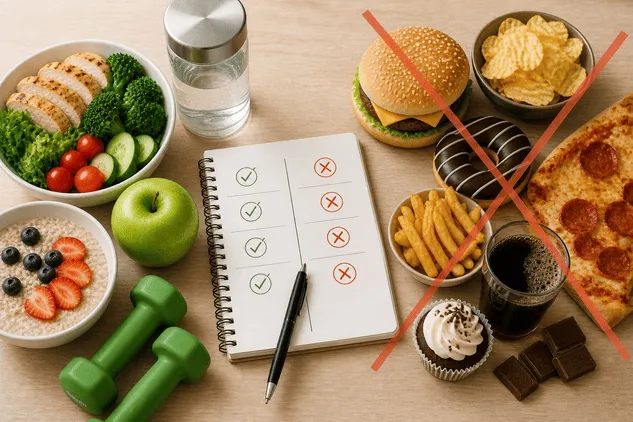
A lot of people feel like they’re doing everything right but still not losing weight. Most of the time, it comes down to small mistakes that make a big difference.
1.Eating Too Little
Less than 1200 calories per day
→ This can slow your metabolism instead of speeding it up
When you cut calories too aggressively, your body goes into “energy-saving mode,” which reduces your metabolism and slows fat burning.
Fix: Keep your deficit moderate (around 300–500 calories) so your body can burn fat consistently.
2.Ignoring Protein → Losing Muscle Instead of Fat
Protein is essential because it: Helps maintain muscle mass, Improves body shape during weight loss
Keeps you feeling full longer
If you only focus on calories and ignore protein, you might lose weight but not necessarily lose fat.
Fix: Include a protein source in every meal (eggs, chicken, yogurt, tuna).
3.Lack of Consistency → No Results
The biggest issue isn’t the plan itself it’s not sticking to it: One day dieting, One day overeating, Then starting over again.
Result: no real calorie deficit for weight loss. Following a structured plan like a beginner-friendly workout routine at home can help you stay consistent and avoid starting over repeatedly.
Fix: Consistency matters more than perfection. Even if you’re not 100% on track, staying consistent most of the time is what brings results. Fix these mistakes, and you’ll likely start seeing a noticeable difference in your progress.
Do You Need to Track Calories Exactly?
A really common question: do you have to track everything down to the gram? Do you need to be 100% accurate to lose weight?
Short answer: No, you don’t have to be super precise but you do need some awareness of your calories.
What does awareness mean?
It means having a rough idea of:
Is this meal high or low in calories?
Is the portion reasonable or too much?
Does your day overall fit your daily calorie intake for weight loss or not?
You don’t need a food scale all the time, but you should have a general sense of what you’re eating.
Why you don’t need 100% accuracy:
Your body isn’t a calculator. There’s always some natural variation in food and calorie counts. What really matters is your average over time. If you’re consistent about 80–90% of the time, you’ll still see great results.
When should you track more precisely?
There are a few cases where being more accurate helps:
- If your weight isn’t changing
- If you’re a beginner and unsure about portions
- If you want faster results
In these situations, you can track your calories for a short period just to fine-tune your plan.
Final Takeaway
If you want to keep it simple: Figure out your daily needs, create a small calorie deficit. and stay consistent even if you’re not 100% perfect. That alone is enough to get real results without feeling restricted. At the end of the day, if you’re still asking how many calories should I eat to lose weight?. It’s not just a fixed number. It’s more of a system you can follow and adjust based on your body. Start today: calculate your calories, set your goal, and take the first step. Small steps add up, so don’t wait for the perfect time just start now. This system is based on practical fitness experience and widely accepted nutrition principles. making it simple and sustainable.
Read also:7-Day Home Workout Plan for Women
FAQ
How many calories should I eat a day if losing weight?
It depends on your maintenance calories, but generally:
Women: 1500–1800 calories
Men: 1800–2200 calories
This range creates a suitable calorie deficit for weight loss for most people. For better accuracy, calculate your personal needs like we explained earlier.
Is 1400 calories enough to lose weight?
Yes, in many cases 1400 calories can work especially for women. It’s if:
Your maintenance is around 1800–2000
Your activity level is moderate
But if it’s too low for your body, it may cause fatigue or slow progress. Balance always matters more than the exact number.
How to lose 5kg in a week?
Honestly, losing 5 kg in one week isn’t realistic or healthy. What usually happens is:
Water loss, not fat
Extreme fatigue
Quick weight regain
A healthy rate is 0.5–1 kg per week, through a calorie deficit and consistent routine.
What is the 9 4 4 rule for calories?
The 9-4-4 rule explains calories in macronutrients:
Fat = 9 calories per gram
Protein = 4 calories per gram
Carbs = 4 calories per gram
This helps you better understand your food and how to structure your calories within any weight loss plan.